
DH Racecard Updates - July 2026
Note – This is a guest blog post made by Dave H – the man behind the DH Racecards. Feel free to message Dave H directly using the comments facility at the DH Portal
The 3X3 Card is without doubt becoming very popular within the horse racing betting community, and it is easy to see why. It offers a clear, structured way of approaching each race, while still keeping the focus on the most important factor in betting: finding value.
The results and profitability are continuing to develop on a regular basis, which is very encouraging. While no betting method can ever guarantee success, the ongoing performance of the 3X3 Card certainly bodes well for the future. It shows that when the ratings are used with discipline, patience, and selectivity, they can provide a strong guide for identifying runners that may be overpriced or underestimated.

The example above shows VOICE OF REASON in the top 3, the bsp was 95 so for me it qualified as a bet. Went on to win!
What makes the 3X3 Card unique is that it provides three separate sets of ratings, all designed to look at a race from slightly different angles. Rather than relying on one single opinion, the card gives a broader picture of where the value may be. This helps users compare runners more effectively and make better-informed decisions before placing a bet.
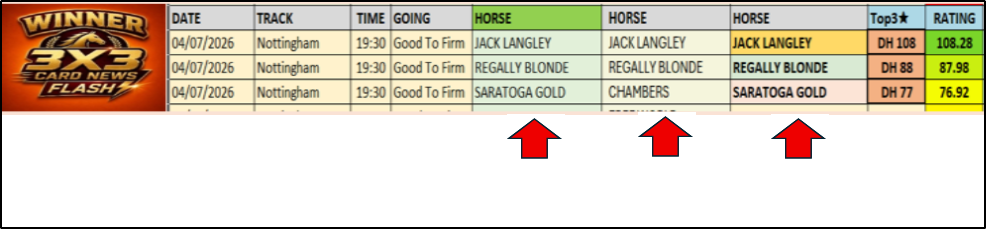
In this example above CHAMBERS showed in the top 3 with a bsp of 34.2, for me this qualified as a bet. The 3 red arrows indicate each separate system.
The main area to concentrate on is the top three rated runners. These are the horses that stand out most clearly within the structure of the card, and they should always be given close attention. The top three can often highlight the strongest contenders, but they can also point towards value selections that may not be obvious from the market alone.
One particularly strong area to explore is races with 10 or fewer runners. These races can often be easier to assess, as there are fewer variables and less traffic to consider. With smaller fields, the ratings may become even more useful, especially when the top three runners are closely aligned with other positive indicators such as form, trainer strength, jockey booking, draw, or race conditions.
Overall, the 3X3 Card is proving to be a valuable tool for those who prefer a more selective and disciplined approach. The key is not to bet in every race, but to use the information carefully, focus on the strongest opportunities, and allow the ratings to guide the decision-making process.
As the results continue to build, the 3X3 Card looks set to become an increasingly important part of a serious horse racing betting strategy.